


Faberge Flambeau

Deb from Luvparfum kindly included a couple of decants when I purchased vintage Coty Chypre. One of those decants was Fabergé Flambeau. And as with most things that take me by surprise, my first impression was, “Fabergé made perfume?” The next impression was, “Wow!”

In Bottle: That “Wow” was to denote how very good this was. Green aldehydes and florals were my first impression.

Applied: I could smell the florals in this upon application. Flambeau opens with a green aldehyde, flowing into a beautiful jasmine mid-note that’s joined by a full-bodied and tempered rose. There are florals in here that I can’t pick out, but I don’t mind very much because it all blends together beautifully. Flambeau ages into a gorgeous lush mid-stage that exudes white flowers with slight hints of animalic musk. Nothing too wild on the animal side. It’s only a touch to give the fragrance even more complexity. As it dries down, I get less of the rose and more vetiver with a little hint of amber and bit of woodsiness that’s been soften with time.

Extra: Fabergé’s Flambeau was a little known fragrance initially released in 1955. It has since been discontinued and is quite a rarity. It’s really a shame since it’s such a beautiful scent from a long gone era of perfume. Fabergé had other vintage classics as well, including Woodhue, Tigress, Aphrodisia.

Design: I haven’t held or seen an actual bottle of Flambeau, but going by the photos, the parfum vial is a beautiful elegant glass piece encased in a golden shell with lovely markings on it. Very reminiscent of luxury from the 50s.

Fragrance Family: Classic Floral

Notes: Aldehydes, jasmine, rose, lily of the valley, iris, ambergris, vetiver, sandalwood, musk.

I’m only guessing with those notes. Anyway, if you want to score yourself a bottle of Flambeau, Deb from LuvParfum might have one in stock along with some of Fabergé’s other classics. This includes a gorgeous Woodhue perfume whistle. If not, you might get lucky on eBay.

Reviewed in This Post: Flambeau, ~1960, ???.

Coty Masumi

Someone asks me if I want to test out a classic Coty, I don’t know how I could say no. Masumi was a Coty chypre from the 1960s.

In Bottle: Spicy with a very grown-up fruity vibe with a layer of deep green woods.

Applied: Bergamot up front with a fruitiness that rolls in rather quickly. The fruits in Masumi can’t be described in any terms that one would use for a modern perfume. Certainly not, “girly” or “fun and sweet”. Masumi’s fruits are reminiscent of Mitsouko’s peach note, in that it’s slightly sweet but very, very sophisticated. The fruits are joined by a spicy floral in the midstage with a big showing from the woods and a smooth earthiness that I’m thinking might be the oak moss at work. The fragrance stays a floral woodsy scent with a hint of spice. The fruitiness I got in the opening was rather short lived and the scent isn’t missing anything because of it. Quite lovely, very classic, helps me remind me that Coty did some great things.

Extra: Masumi was released in the 1960s and was later repackaged in the 1970s. It has since been discontinued.

Design: The design for Masumi was very reminiscent of the era in which it was released. The shape is a bit familiar in Guerlain’s Idyll but with a great deal more authenticity. It looks simple, with a teardrop style shape and a tall metal cap. I don’t have a physical body to judge by, but the design works for what it is.

Fragrance Family:  Classic Chypre

Notes: Bergamot, pineapple, melon, rosewood, rose, violet, cardamom, musk, sandalwood, oak moss, cedar, amber, vanilla.

The more classic Cotys I experience, the sadder I am that most of their great fragrances are no longer available.

Reviewed in This Post: Masumi, ~1970, Eau de Toilette.

Chypre de Coty Vintage

chyr33lk2a

Welcome back to the world of old school Coty, before they made celebuscents, they were making Chypre. I had finally shelled to buy the reissued version of Coty’s Chypre from my friend, but like a true fragrance addict, I couldn’t stop there. The older the Chypre, the better it was and while I loved the reissue I had, I wanted something older and more vintage. After a bit of searching, I got into contact with Deb at luvparfum. And she hooked me up with an earlier version in a beautiful flacon. I was ecstatic.

Chypre de Coty

Chypre de Coty

In Bottle: The fragrance inside the bottle is doing well. Most vintage fragrances, built right and proper, tend to do well anyway and it’s got a nice smoothness to it with a hint of familiar Chypre.

Applied: Now, I have a sample of Coty’s Chypre from Surrender to Chance and this doesn’t smell quite like it. It’s lighter, softer, more yielding but definitely reminiscent of Chypre. I get a bitterness upon application, a nice gentle spice, and a strong green floral showing. The fragrance seems to gather depth as it progresses, taking on an earthy quality with a slightly stronger floral note and a hint of powder. In the end, Chypre rolls out and leaves me feeling a little sad because I know there isn’t enough of it left in this world to enjoy it all. Its dry down is marked with a deep earthy orris and patchouli. There’s nothing quite like this anymore. Nothing that even comes close to the complexity of perfumes like these and it’s very sad. If Coty needs to do anything, it’s bring back their vintage fragrances. Similar to the last Chypre I tested and reviewed, this one also smells like history.

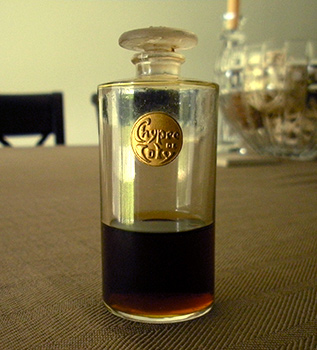
Extra: My quest for Coty Chypre started the day I first smelled the reissue. Then I had to get an older version. Then I had to buy the reissue because I had been sleeping on the decision for years. Now I’ve sprung for the vintage. The only problem is, I have no idea what concentration I have or what year I have. If anyone can help me identify the concentration and/or year of the bottle in the photo, I will be forever grateful.

Design: I love how Coty’s Chypres were bottled, but there are a lot of iterations and I’m not very good at determining what’s what. This particular bottle is cylindrical with a round stopper. Feels good to hold, and scares me constantly because I don’t want to break it.

Fragrance Family: Classic Chypre

Notes: Bergamot, jasmine, rose, patchouli, labdanum, oakmoss.

Normally I would guess at the year of the fragrance I have, or give a range for when I believe the fragrance was made, but in this case, I really have no idea and I really, desperately want to get as close and accurate as I can with this particular bottle. So any help would be greatly appreciated! Here’s a photo of the stopper.

Reviewed in This Post: Chypre de Coty, ~1920, EDP.

Miss Dior

Miss Dior

Miss Dior, unlike her younger sister (Miss Dior Cherie), is a smart, sophisticated woman who enjoys the finer things in life but doesn’t let it get to her head. She’s humble and complex with a classical charm that Miss Dior Cherie can never beat.

Miss Dior

Miss Dior

In Bottle: Green with a prominent aldehyde quality to it and a dusting of florals.

Applied: Sharp green aldehydes that are a bit of a sting on the old nostrils. Miss Dior goes on strong and powerful, hits you with a wave of classical perfume and reminds you of what a real chypre ought to smell like. Nothing like the lilting chypres of today that have been toned down and have lost their oak moss. Miss Dior is the full force of chypres upon application. As the fragrance ages, she smooths out a bit taking on a powdery quality to me with a warm sensuality that works in the complexity of the fragrance. It’s hard to describe complex fragrances for me because breaking them down into components and saying, “I smell this and now I smell this” would ruin the experience. Instead let me just say that Miss Dior smells like a vintage with an aldehyde and floral mid-stage prominent in neroli and jasmine and is every bit the chypre that she’s supposed to be. The fragrance dries down into a lovely rich flowers, forest and buttery leather scent that makes me want to stick my nose to my wrists and deeply inhale.

Extra: Miss Dior was released in the late 1940s and was composed by Jean Carles and Paul Vacher. Like most (if not all) classics that have survived till today, Miss Dior has been reformulated. The version I’m reviewing in this post is reportedly from sometime in the 1970s. I have not tried the more readily available, “Miss Dior Originale” yet, but I do have a sample of that so I will be trying it eventually.

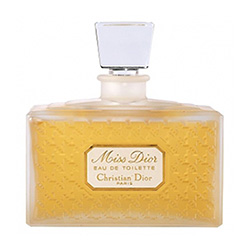
Design: Miss Dior seems to do everything better than Miss Dior Cherie. The bottle has a classic look, but one that will never go out of style. While it’s a familiar shape to Miss Dior Cherie, Miss Dior’s more grown-up style and beautiful textured glass sets it a class above its younger counterpart. Miss Dior doesn’t need a bow on its neck to exude femininity, basically.

Fragrance Family: Chypre

Notes: Aldehydes, gardenia, galbanum, clary sage, bergamot, carnation, iris, jasmine, neroli, lily of the valley, rose, narcissus, labdanum, leather, sandalwood, amber, patchouli, oak moss, vetiver.

It probably sounds like I’m ragging on Miss Dior Cherie a lot in this post, and I am. It’s not that Miss Dior Cherie doesn’t accomplish good things as a modern gourmand that appeals to younger women, it’s just that Miss Dior–who sometimes gets confused with her younger counterpart–gets a lot of bad press from people who accidentally picked her up thinking she’ll smell anything like the candy-like Miss Dior Cherie. Then come the proclamations that Miss Dior “smells like old lady”, and that’s just unfortunate.

Reviewed in This Post: Miss Dior, ~1970, Eau de Toilette.

Caron Narcisse Blanc

Narcisse Blanc

The Narcisse Blanc I have is a–of course–sampler from a parfum extrait bottle. I was wondering about the availability of this juice, given my very limited experience with straight up parfum extraits but was happy to note that Luckyscent carries it on their websitefor a rather reasonable price too.

Narcisse Blanc

Narcisse Blanc

In Bottle: Sweet orange floral with a strong dark jasmine presence and a bit of earthy iris, powder and woods.

Applied: Bright opening from Narcisse Blanc. I get an orange blossom scent that invades right away with a very strong regiment of flowers. The jasmine is quick to roll in with this soft touch of powder and earthiness. It reminds me of darker flowers than a bright jasmine. Like there’s a strong neroli presence that pulls the whole thing together.  The neroli makes it smell like what I imagine the dirt would be like when you stick your face right into the flowers and take a big whiff. Narcisse Blanc reminds me of daylight, warmth, dirt and the sun. It’s rather strong, possessing a sweet floral personality with a sophisticated bent and a touch of earthy powder like dust being kicked up by a dry wind. The fragrance as a whole is extremely complex and a unique joy to smell. I have to wonder how much of its complexity can be attributed to its parfum concentration, but this is a scent that’s been around long enough to stand the test of time. So while I feel like the parfum extrait might be helping it, Narcisse Blanc is probably just a good unique and complex classic. The scent dries down steadily into an earthier, smokier version of itself with the presence of sandalwood and a dusky musk note.

Extra: Narcisse Blanc is a sister perfume to Caron’s Narcisse Noir. Both are very old fragrances who have been around since the early 1900s. Both are still available today at Luckyscent.

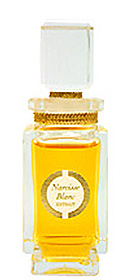
Design: Caron’s bottles are always beautifully made and work wonderfully in terms of manual handling. I get a good grip, I can apply easily, and to top it all off the bottle looks gorgeous as a display piece–or it would if I had a bottle and already used up what was inside. No concerns when it comes to design and Caron.

Fragrance Family: Earthy Floral

Notes: Orange blossom, neroli, jasmine, rose, musk, vetiver, sandalwood.

It’s nice to get in a classic now and then. I found myself really missing the way these perfumes smell compared to contemporary fragrances.

Reviewed in This Post: Narcisse Blanc, 2011, Parfum.

Caron Acaciosa

Acaciosa

Acaciosa is one of perfumery’s greatest floral perfumes. It was released in 1924 and remains one of the most beautiful, lush jasmine and rose fragrances ever.

Acaciosa

Acaciosa

In Bottle: A big floral bouquet of jasmine and rose with a slight hint of amber.

Applied: Jasmine and rose are the stars here and the major players throughout the entire fragrance. The instant Acaciosa is applied you will smell these two principle notes that have endured the test of time and have continued to appear together in some of the fragrance world’s most popular classics and contemporary fragrances. Acaciosa does jasmine and rose proud because it plays up their authentic beauty and blends them together so well that a sniff of Acaciosa tells you immediately that you’re smelling a fantastic floral. There’s no real debate to be had, you’re smelling history and you’re smelling a floral perfume as it should be. Right from the start, into the middle, and down into the base you get jasmine and rose mingling together in a gorgeous medley. There’s a faint hint of sweetness and a jolt of tart pineapple that serves to deepen this fragrance with its mostly heady floral bouquet. The base intensifies with a warm amber quality. This amber note is present during the opening and midstages but doesn’t become too strong until you reach the base.

Extra: Caron has a fountain version of Acaciosa available for those of you who wish to experience the full on artistry of this fragrance. One of these days I’d like to see a Caron fragrance fountain for myself.

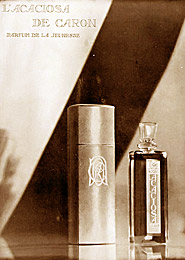
Design: The bottle pictured above is from a vintage ad dating back to the 1930s when Acaciosa was a bit easier to find. It’s a shame this fragrance is so exclusive now. I have yet to hold or even see more than a small sample of this stuff but everything Caron made back in its hey day looks beautiful.

Fragrance Family: Classic Floral

Notes: Orange flower, pineapple, jasmine, rose, amber.

I have no idea and no way to tell how old the decant of Acaciosa I have is. We can only take a blind stab in the dark that it is a vintage that could have been from the 40s, but even then we can’t be quite sure. So take the dating of my sampler with a grain of salt since I can’t guarantee its accuracy.

Reviewed in This Post: Acaciosa, ~1940, Parfum.

Dior Diorissimo

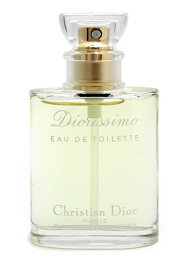
Diorissimo

Diorissimo is a classic from the 1950s before Dior went the youth route and replaced their hard hitting fragrance lines with stuff like Miss Dior Cherie. I smell Diorissimo and miss the days when it was okay for a fragrance to be heavy and heady.

Diorissimo

In Bottle: Florals with a slight sting of citrus up front and a coating of animalic civet in the background.

Applied: Fresh and green with a citrus opening and that smell of leaves and dew. The lilies come in during the mid-stage and in the final act of the opening and proceed to dominate the fragrance. The lily scent in the middle is very noticeable, clearly the stars of the show as the fragrance settles into this heady floral lily mixture that’s just unrelenting. I still get a bit of that fresh green leaf scent that present when this fragrance was first applied but the civet can’t stay hidden forever. It creeps up as the fragrance gets warmer and dirties the scent up quite a bit. At times I’m wondering who let the mongoose into the garden as the civet is a bit disturbing but at the same time feels like it belongs. The dry down introduces a bit of sandalwood, scenting together with the lilies as the two do a little good against the ever-present civet.

Extra: Diorissimo is still available in its Eau de Toilette form and for the most part, it smells similar now to when I first smelled it in the 90s and, all things considered, it is available for a fairly reasonable price. You can also hunt down the Parfum concentration, though I’m told it’s more rare, more expensive, and even headier than the EdT.

Design: Bottled rather simply but has a classic elegance to it that says this stuff doesn’t need frills and gimmicks to look good and be good. I like the simplicity of it all. The brush script I can take or leave but the overall design is pleasing and nice.

Fragrance Family: Classic Floral

Notes: Bergamot, leaves, rosemary, lily, lilac, jasmine, lily of the valley, ylang-ylang, civet, sandalwood.

I’m not sure how to treat the civet in Diorissimo. It’s not heavy enough to be a deal breaker, but I do notice it and it does put me off a little. Regardless, if you like a little civet here and there Diorissimo is a beautiful classic that’s survived the times–mostly–in tact.

Reviewed in This Post: Diorissimo, 2005, Eau de Toilette.

Caron Or et Noir

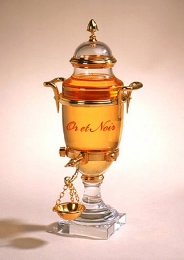
Or et Noir

Word on the street at the time of my opening the decant vial of Or et Noir was that it had amazing strength and projection. Why I didn’t listen to good advice is anybody’s guess. It knocked me off my feet. In a good way though.

Or et Noir

In Bottle: Sharp rose up front. Very strong and overwhelmed my nose as I, foolishly, whiffed instead of wafted.

Applied: After waiting out the initial knockout punch delivered by my whiffing, I tried her on. You need very little of Or et Noir because 1) The stuff I had was in parfum concentration, and 2) It’s strong no matter how you dress it up. The rose is immediately noticeable, heady and dense and rich. I felt like I was projecting so much of this that someone could be standing on the other side of the room and still smell me. It’s quite a bit intense on first application but it grows more complex and settles down during the mid-stage where the other florals spring up like–well, flowers in a garden. Lilac and geranium help temper the rose a bit and there’s a bit of spiciness lent by the carnation to draw the complexity out of the scent. The rose is still the star of the show and remains the star throughout as you head into the dry down with a slightly earthy, soft scent covering the background as the rose rolls through.

Extra: Or et Noir was released in 1949, making it a Caron classic. I don’t know how anyone can get a hold of this fragrance now aside from asking around at Caron boutiques.

Design: I’ve only ever seen the extremely fancy crystal flacon of this stuff. Now, seeing it and touching it and using it is another matter as I have yet to do any of those things. It sure looks expensive, delicate and extremely luxurious though.

Fragrance Family: Classic Floral

Notes: Rose, lilac, carnation, geranium, oak moss.

I’m not sure I really like this interpretation of rose more than my current top pick (Mahora by Guerlain) but it’s lovely. I just wish she was wearable from the get go instead of having to wait for her to settle down a bit.

Reviewed in This Post: Or et Noir, ~1970, Parfum.

Paco Rabanne Calandre

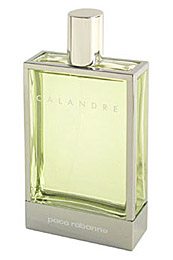
Calandre

Okay, now we’re talking. After three disappointing fragrances in a row, I think a little classic ditty like Calandre’s going to make me see the Paco Rabanne line of fragrances in a better light.

Calandre

In Bottle: Aldehydes and enormous florals. Calandre smells like a classic pretty much immediately. I’m thinking I might associate aldehydes with “smells like a classic” though, so bear that in mind.

Applied: Rose and jasmine with those soap aldeyhydes that makes me think “classic”. The fragrance settles down a bit as you let it age but the opening did knock me back because it was quite strong. As Calandre settles down, the mid-stage is an easier to wear and less “punchy” mix of lilies, jasmine, rose, and that omnipresent lingering aldehyde. The soft floral quality of the fragrance shows through more and more as the time passes and the fragrance is less of a punch in the nose and becomes more of an airy breeze. Keep in mind that when I say “airy breeze” when I refer to Calandre, I don’t mean modern perfume, wispy, wilting daisy, and barely there “airy breeze”. Calandre is definitely more pronounced than modern wispy perfumes. But it is light when you compare it to other fragrances such as the heady Guerlain Jicky or Joy by Jean Patou. The dry down is a little bit of a disappointment as Calandre settles into a soft sandalwood with a hint of dirtiness and musk.

Extra: Calandre, so far, seems to be the only fragrance from the Paco Rabanne line that I can actually see myself liking. Though it’s a bit of a weak contender when it comes to others in the classics category, it is leaps and bounds more impressive than the more recent Paco Rabanne releases.

Design: Remember when Paco Rabanne fragrance bottles weren’t literally designed? By that I mean, you didn’t have a perfume called “1 Million” bottled in a gold brick? Or a perfume called “Lady Million” bottled in a gold diamond? I’m not a huge fan of the boxy, kind of boring, Calandre but it’s definitely a step in a classy direction for a fragrance house that has, so far, rubbed me wrong in the design department. And while I can see the appeal of the literal bottles, I just don’t think they’re my kind of thing.

Fragrance Family: Classic Floral

Notes: Bergamot, green notes, aldehydes, lily of the valley, rose, jasmine, iris, geranium, sandalwood, oakmoss, vetiver, amber, musk.

Calandre, interestingly enough, is still reasonably available for purchase. I’m not sure if it’s still being produced. If it is, don’t expect that oakmoss note to be real–or even present. If it’s been discontinued then that would explain why a great deal of the bottles are going for $100 or more. Still, a pretty good price for a fragrance that doesn’t smell like anything made today but is also light and wearable enough if you’re afraid of the old classics. This is probably one of the more approachable classics I’ve tried.

Reviewed in This Post: Calandre, ~1980, Eau de Parfum.

Coty L’Origan

L'Origan

Sometimes, just because I’m immature, I like to pretend that Coty only came out with the good stuff and all the stuff they’ve made that’s been terrible just simply doesn’t exist. When I think of Coty these days, the first thing that pops into my head is Lady Gaga and everybody freaking out about her up and coming “blood and semen” perfume. I won’t mention our favorite friend from Etat Libre d’Orange but I will say that the Coty of the early 1900s could have taken “blood and semen” and turned it into something beautiful. These days, I kind of hope Gaga at least gets something that isn’t a fruity-floral. Oh, Coty.

L'Origan

In Bottle: L’Origan has that classic smell that you just can’t imitate these days. It’s dense and complex with a varying, slightly discordant mixture of big honking spices and florals up top.

Applied: Spicy on arrival with a floral touch coming up. There’s a very old-world style to the way this perfume goes on and starts to age. People have compared L’Origan to L’Heure Bleue–well,  I should say they compare L’Heure Bleue to L’Origan because Guerlain’s hit fragrance was released after this one. It’s similar in that both scents trail the same sort of fragrance with L’Heure Bleue exhibiting a much colder, more melancholy personality. L’Origan, to me, is warm and much more animalic. There’s a hint of animal in the opening there and I experienced hints of animalics throughout the livespan of the scent. It’s blended very well, though, not overpowering the scent but rather giving it a bit of sensuality and added depth. Another thing about L’Origan vs. L’Heure Bleue, it’s spicier with slightly less noticeable florals and it’s ultimately a brighter scent though its uses of the  spices are very familiar. There’s a powderiness to this that tends to show up in vintage fragrances as well as a heavy dose of clove. As L’Origan approaches dry down it maintains that spiciness the whole time the florals are totally gone but what’s waiting at the bottom is this thick, rich warmness that reminds me a bit of slick metals and mosses.

Extra: L’Origan was released in 1905 and still survives today–though in an undoubtedly heavily reformulated state. As always, vintage is leaps and bounds better.

Design: The original L’Origan was bottled in a flat glass bottle of a squarish shape with the Coty seal on it. I had a warm, amber-like color and was a bit reminiscent of Chypre de Coty in appearance. The modern bottle (pictured) is reminiscent of a flower bulb with a spiky crown for a cap. I have to say I prefer the old style better.

Fragrance Family: Spicy

Notes: Bergamot, orange, coriander, pepper, peach, nutmeg, clove, jasmine, violet, rose, ylang-ylang, orange flower, benzoin, cedar, incense, vanilla, sandalwood, musk, coumarin, civet.

Somehow L’Origan comes out as the happy side of L’Heure Bleue. These two could be best friends, though probably not sisters. I have to say, despite my love for L’Heure Bleue–I like L’Origan a bit more.

Reviewed in This Post: L’Origan, ~1950, Eau de Parfum.